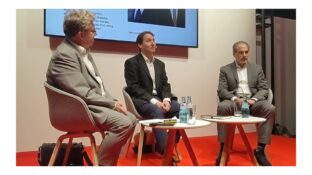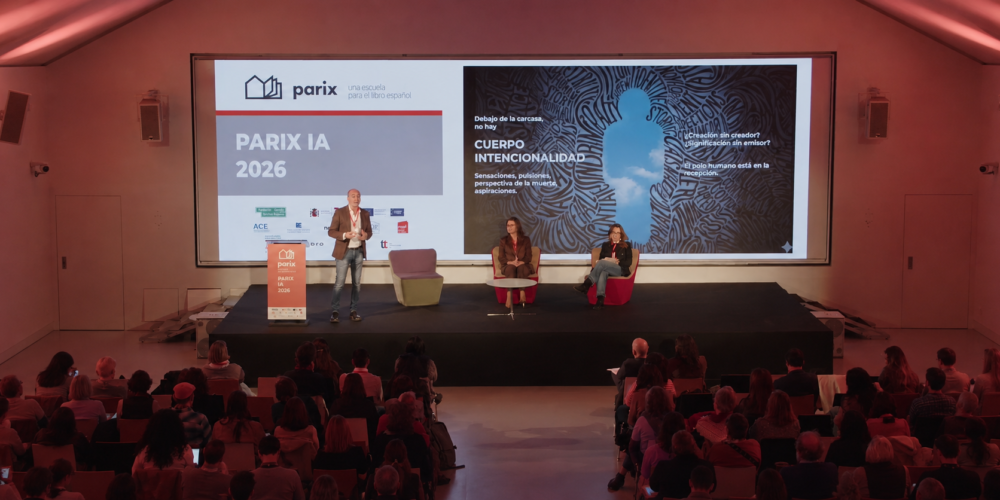
At PARIX IA 2026, held in Madrid on 18 March 2026, philosopher Liliana Acosta, mathematician and higher-education adviser Mercedes Siles Molina, and AI specialist David Sánchez examine artificial intelligence from philosophical, mathematical and technological perspectives. Their discussion asks what intelligence, creativity and meaning actually are—and whether these concepts can be applied to machines in the same way that they are applied to human beings.
The panel distinguishes language as something created through human use from the statistical production of convincing linguistic forms. An AI-generated text may acquire meaning when somebody reads and interprets it, even though there is no conscious author or human “sender” behind it. This raises an important distinction between producing content that appears meaningful and possessing intention, consciousness or genuine understanding.
The speakers also challenge the tendency to equate artificial intelligence with natural intelligence. Human intelligence involves relating ideas, experiences and contexts, while present-day AI operates through probabilistic models trained on large collections of data. These systems can identify patterns and perform remarkably useful tasks, but their capabilities should not be confused with the way human thought, memory and judgment work.
Ethics and responsibility therefore remain central. Using Frankenstein as a metaphor, the discussion suggests that responsibility belongs primarily to those who create and deploy technology, rather than to the technology itself. Regulation, education and professional practice must begin with a clear understanding of what AI can and cannot do. For publishing, this reinforces the continuing importance of human authorship, interpretation, verification and editorial judgment.
Original title: Una Mirada a la Inteligencia Artificial Desde la Filosofía