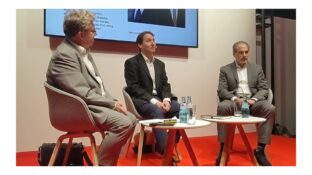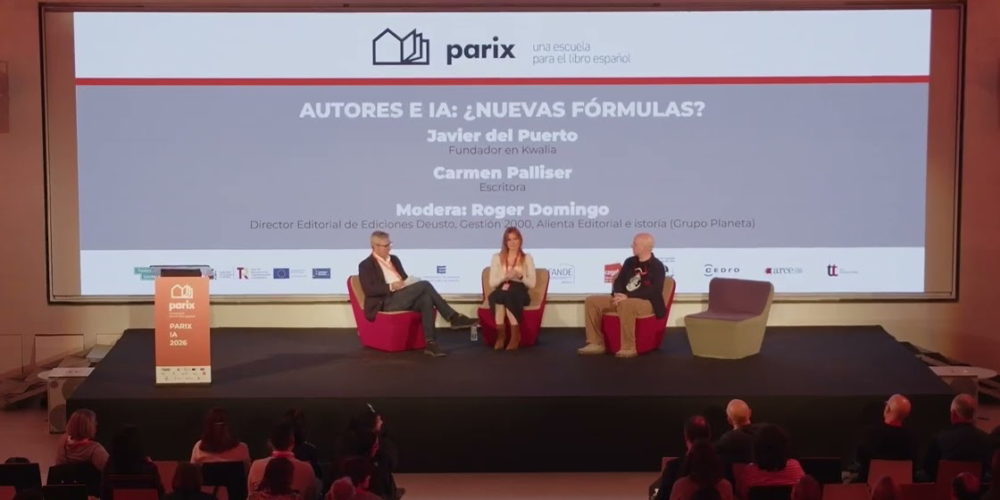
At PARIX IA 2026, held in Madrid on 18 March 2026, Javier del Puerto, founder of Kwalia, and novelist Carmen Palliser examine how artificial intelligence is transforming authorship and publishing. Moderated by Roger Domingo, the conversation contrasts an AI-first publishing experiment with the perspective of a human author who uses AI extensively without allowing it to write her books.
Del Puerto presents Kwalia’s “heteronyms”: carefully designed artificial author-personas with distinct interests, styles and identities. These systems produce nonfiction on subjects such as AI consciousness, warfare and hybrid human-machine thought, as well as romantic fiction published through the Fiamma Books imprint. Kwalia is also exploring stories whose readers can converse with protagonists and potentially influence future narrative developments.
Palliser explains that she uses AI for research, brainstorming, promotional copy, book-trailer scripts, animation and synthetic narration. However, she does not delegate literary prose to the technology and verifies factual research with human specialists because AI can make convincing mistakes. She considers artificial authors formidable competitors: they understand language and genre conventions, work continuously and face none of the practical limitations experienced by human writers.
The discussion also considers copyright, the growing ability of general-purpose models to perform editorial tasks and the future distinction between human and machine writing. Palliser identifies authoritative nonfiction and autofiction—works grounded in professional expertise or lived experience—as areas where human authors retain an advantage. Del Puerto believes human-like AI writing is only a transitional stage; the more radical possibility is that AI may eventually develop creative forms and a language of its own. Both expect AI to become deeply embedded in publishing, although its ultimate effects remain unpredictable.
Original title: Autores e IA: ¿nuevas fórmulas?