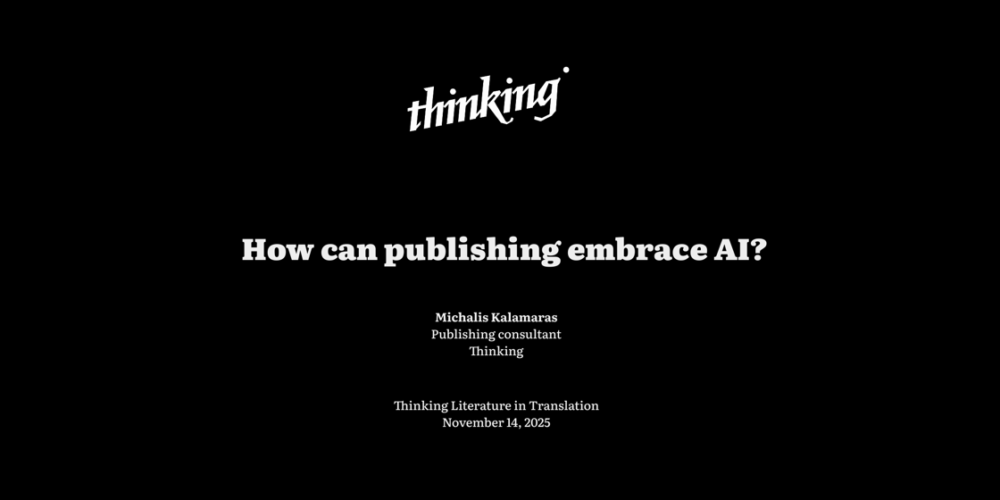
This presentation was delivered by Michalis Kalamaras at Thinking Literature in Translation on 14 November 2025. It places generative artificial intelligence within publishing’s longer digital transformation, alongside developments such as desktop publishing, e-books, print on demand, online retail, audiobooks and direct-to-consumer communication.
Kalamaras surveys AI applications throughout the book value chain. These include manuscript evaluation, editorial development, proofreading, translation drafts, metadata enrichment, marketing materials, sales forecasting, audiobook production, accessibility and interactive forms of reading. He distinguishes casual experimentation from systematic integration and from emerging AI-based business models.
The presentation also addresses copyright, plagiarism, transparency, employment and content inflation. Particular attention is given to unauthorised training data, licensing arrangements, the legal status of AI-assisted works, the need for reskilling and the danger of replacing junior professionals. Human supervision and editorial judgement remain indispensable.
Kalamaras recommends aligning AI projects with business strategy, enabling staff experimentation, beginning with pilot projects, appointing an internal AI champion and establishing clear guidelines. His central argument is that publishers must defend creativity and copyright while actively learning to use AI, especially because these tools may strengthen smaller publishers and less widely spoken languages.