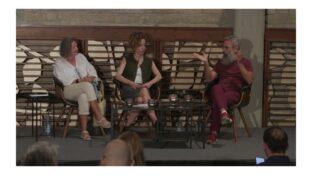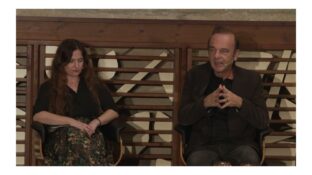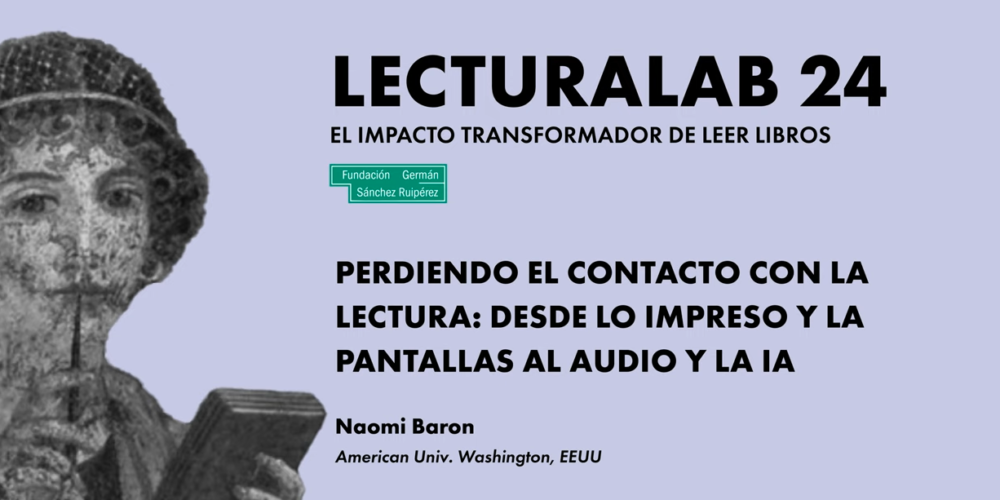
How do different media affect the way we read, understand and engage with texts? In this LecturaLab 2024 keynote, Naomi Baron explores the movement from printed books and screens to audiobooks, video and artificial intelligence. She places these changes within a broader decline in sustained reading, particularly among young people, and asks what may be lost when technologies increasingly perform parts of the reading process for us.
Drawing on experimental evidence and her own international research, Baron explains why readers frequently associate print with stronger concentration, deeper absorption, imagination and a sense of physical connection. Although digital formats offer convenience and accessibility, studies often find better comprehension of longer and informational texts when they are read in print. Audiobooks and video can be highly engaging, but their value depends on whether the reader’s objective is entertainment, escape or learning.
Baron then considers artificial intelligence as a new kind of reader. AI tools can locate, summarise, compare and interpret texts, giving readers faster access to information, translations and personalised assistance. However, their efficiency may also encourage automation bias, weaken reading and communication skills, reduce independent thinking and diminish people’s motivation to engage directly with books and other substantial texts.
The keynote concludes that choosing a reading medium amounts to making a personal bargain. Readers, educators and institutions must weigh convenience against comprehension, engagement and cognitive development. Baron encourages us to use digital media and AI deliberately, remaining conscious of the intellectual, emotional and social value of reading for ourselves.