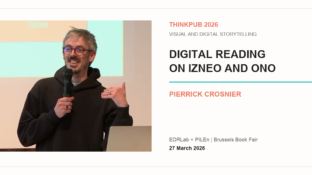
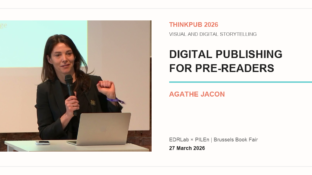
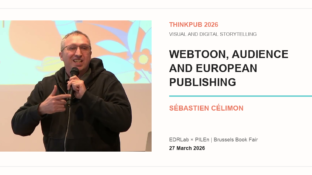
During Readmagine 25 there was a session moderated session by Porter Anderson, (Publishing Perspectives), a compelling conversation unfolded around the evolving landscape of training and skill development within the book publishing industry. Anderson, joined by Luis González of GSR Foundation and Alma Čausevič of Beletrina, delved into two distinct yet synergistic educational initiatives shaping the future of publishing professionals across Europe and it also meant a presentation of ThinkPub for the audience of this international event.
The emergence of PARIX: revolutionizing education in publishing
Luis González, Director General of GSR Foundation (FGSR), introduced PARIX, a pioneering educational platform tailored specifically for the Spanish book industry. This school is a decision made by the Ministry of Culture of Spain and finance by their budget of the PRTR. The strategic approach from the perspective of FGSR when was chosen to implement the programme takes advantage of the research insights gathered five years ago and the, which highlighted significant challenges linked to training within the industry.
Initially conceived during the lockdowns, PARIX quickly evolved into a comprehensive educational endeavour spanning more than 40 courses (15 ECTS) tailored to various segments of the publishing value chain. González emphasized the platform’s agility and responsiveness to industry demands, underscored by its swift adaptation to an all-encompassing online format, complemented by periodic intensive «bootcamps» fostering networking and collaborative learning.
What sets PARIX apart is its collaborative approach with industry leaders and associations, ensuring that course offerings are not only relevant but also informed by real-world challenges identified through continuous dialogue and feedback loops with publishing professionals. González highlighted the platform’s success in engaging over 8,000 participants, signalling a robust uptake and recognition within the industry.
ThinkPub: nurturing small and medium-sized publishers
Alma Čausevič, representing Beletrina, coordinator of ThinkPub initiative, offered insights into a complementary effort focused on empowering small and medium-sized publishers across Europe. Born out of a community-driven approach, ThinkPub emphasizes practical, day-to-day skills development and strategic guidance tailored to the unique challenges faced by smaller publishing entities.
Unlike PARIX’s broad educational scope, ThinkPub adopts a nuanced, localized approach, acknowledging the intuitive leadership prevalent in smaller publishers while bridging gaps through targeted training modules. Čausevič stressed the importance of learning from failures and shared experiences, positioning ThinkPub as a supportive network that encourages innovation and resilience.
The program’s recent integration with Readmagine further enriches its offerings, facilitating deeper dives into topics ranging from employee experiences to emerging technologies, crucial for staying competitive in a rapidly evolving publishing landscape.
Insights and future directions
Throughout the discussion, both González and Čausevič underlined the industry’s evolving needs, particularly in talent acquisition and retention. González highlighted the challenge of aligning traditional publishing practices with modern skill demands, emphasizing the role of cross-industry insights and targeted reskilling efforts.
Čausevič emphasized the need for agility and adaptability, particularly in nurturing a diverse talent pool capable of navigating future industry landscapes. Both PARIX and ThinkPub exemplify innovative responses to these challenges, leveraging community engagement and collaborative learning to foster a more resilient and dynamic publishing sector.
Addressing the gaps in talent acquisition and marketing
A key theme emerging in the conversation was the increasing recognition that the publishing industry, like many others, is facing a significant talent gap. As Alma Čausevič pointed out, the traditional view of publishing as just about books is outdated. Now, the industry needs professionals who can engage with an ever-expanding range of products and services. At Beletrina, Čausevič emphasized the need to rethink how the industry defines its offerings, going beyond traditional books to create an «intellectual entertainment» platform, combining books, films, and deeper intellectual content. The shift from simply marketing books to curating experiences and expanding into diverse media is becoming critical.
This innovation isn’t limited to just products but extends to the way publishing professionals need to be trained. Marketing, for example, is a critical area that is evolving rapidly. Many publishing professionals—especially those entering the industry without formal training in marketing—have been tasked with complex roles that they aren’t fully prepared for. This misalignment often leads to underutilized potential, and Čausevič’s focus is on training people to better understand and adapt to this new reality. By looking at marketing as a multi-layered discipline and emphasizing continuous learning and improvement, ThinkPub is responding to a clear demand for skill development.
Understanding new competencies required in the publishing industry
As the industry becomes more technologically advanced, new competencies are emerging that publishing professionals need to develop. Both González and Čausevič pointed to AI as a key area of focus. While the immediate buzz around generative AI and copyright issues is a hot topic, they both agree that the real value lies in how AI can help streamline operations behind the scenes. The back office in publishing stands to benefit greatly from AI in terms of efficiency and accessibility, and this is one area where training programs need to catch up.
However, beyond AI, Čausevič sees a growing demand for skills related to sales, particularly as the market itself changes. The traditional model of book sales is evolving, with subscription models and hybrid platforms gaining traction. For instance, Beletrina’s Bletrina Digital platform is expanding beyond ebooks and audiobooks to offer a broader “intellectual entertainment” service. This, in turn, calls for different marketing, sales, and customer service skills. The growing demand for professionals who can navigate this complex space means that training needs to be dynamic, embracing new business models as they emerge.
Adaptation and flexibility in training programs
Luis González also shared insights into the adaptability of PARIX, the educational platform launched by GSR Foundation in collaboration with all the associations of the publishing industry and the Ministry of Culture of Spain. González stressed that while some training courses, like those on how to write a fantastic novel, continue to thrive, others are beginning to show diminishing returns. For example, basic skills training remains incredibly popular, yet more advanced topics—like data analysis and understanding audience dynamics—are harder to sell to publishing professionals, despite their increasing relevance.
The ability to adapt to what the industry needs is crucial for the success of training programs. PARIX has learned to refine its offerings based on feedback, with courses on emerging fields like AI and strategic marketing being some of the most requested. However, González noted that even with the rapid evolution of these programs, there is always the challenge of identifying what will truly resonate with both new entrants to the industry and those looking to upskill.
Networking and building communities
Both Čausevič and González touched on the importance of building networks and communities through training initiatives. ThinkPub’s goal is not just to provide training, but to foster a community where people can learn from each other’s successes and failures. The idea of failure as a learning tool is a core value of ThinkPub, where case studies—both successful and unsuccessful—help participants grow.
For PARIX, the concept of alumni networks and community engagement is also critical. González mentioned the initiative’s goal to create a community of past trainees who can share knowledge and continue to engage with the platform. This network will allow alumni to collaborate, providing valuable insights and feedback for future trainings.
The Future of publishing training
Looking forward, both Čausevič and González shared their visions for the next year. Čausevič emphasized that for ThinkPub, the next big step is increasing local-level engagement, creating more opportunities for face-to-face networking and collaboration. She also highlighted the importance of aligning with broader industry groups like the Federation of European Publishers to foster more significant discussions on training and development.
On the other hand, González envisions PARIX continuing to grow, both in size and scope. He hopes to expand the catalog of available courses to more than 50 offerings, covering an even wider range of topics and addressing the specific needs of publishers in Spain and, potentially, Latin America.
Both initiatives share a common goal: to ensure that the publishing industry evolves by equipping professionals with the skills they need to thrive in an ever-changing landscape.